Anvil Nutrition Zinc Glycinate
- Integrity First
- Every dose on the label
- No proprietary blends
- GMP certified
- Third-party tested
- Free shipping over $100
Details
Zinc is involved in over 300 enzymatic processes in your body, from immune function and hormone production to protein synthesis and the cellular repair that happens every day. Your body doesn't store it, so you need a consistent daily intake. What matters when you buy a zinc supplement is the form it comes in, because the form decides how much of that zinc you actually absorb.

Zinc is a cofactor for more than 300 enzymes, which means those enzymes cannot function without it. That includes the enzymes behind immune cell production and wound healing, and the ones that handle DNA synthesis and cellular division. When your zinc levels are adequate, these systems run. When zinc is short, they slow down across the board because the same mineral is being pulled in every direction.
Your body uses zinc every single day and does not store it in meaningful quantities. Unlike fat-soluble vitamins that accumulate in tissue, zinc needs to be replenished through daily intake. This is why even marginal deficiency, which doesn't show up on standard blood panels, can affect multiple systems simultaneously.
When zinc intake gets cut low enough, testosterone comes in lower than it does at the highest intake. A controlled study published in the American Journal of Clinical Nutrition put eleven young men on a metabolic ward through five daily zinc intakes over 35 days each, and at the lowest intake, 1.4 mg a day, their serum testosterone measured 21.9 nmol/L, down from 26.9 nmol/L at the highest intake of 10.4 mg a day. At 1.4 mg of zinc a day compared with 10.4 mg, semen volume was also lower, 2.24 versus 3.30 mL, and the authors write that serum testosterone, semen volume and total seminal zinc loss per ejaculate are sensitive to short-term zinc depletion in young men.
This doesn't mean zinc supplementation will raise testosterone above your normal baseline. What it means is that this study only looked at what happens when zinc intake gets cut far below normal, from 10.4 mg a day down to 1.4 mg, and it says nothing about adding zinc on top of an intake that was already sufficient. Adequate zinc intake is a prerequisite for normal hormonal function, not a performance enhancer.
View Research: Zinc Depletion & Serum Testosterone (Hunt et al. 1992, Am J Clin Nutr) →
The most common form of zinc in cheap supplements is zinc oxide. In 15 healthy adults given 10 mg of zinc without food, median absorption was 61.3% from zinc citrate and 60.9% from zinc gluconate, compared to 49.9% from zinc oxide, and three of the participants absorbed little or none of it from the oxide form.
This is why the form matters more than the dose on the label. What your body absorbs is what counts, not what's printed on the bottle.
View Research: Zinc Absorption From Citrate, Gluconate and Oxide in Healthy Adults (Wegmuller et al. 2014, J Nutr) →Zinc bisglycinate, which you will also see sold as zinc glycinate, is zinc chelated to two molecules of the amino acid glycine. That chelation protects the zinc from binding to phytates and other compounds in your diet that block mineral absorption. The study linked below was run in rats on a phytate-rich diet, and in that animal model zinc glycinate's bioavailability came out 16% higher than zinc sulphate's, 49% versus 42%. That is an animal model, so it supports the mechanism. How far that gap carries over to you is a separate question. Phytate is the same anti-nutrient that sits in grains and legumes, and in nuts and seeds.
Beyond absorption, bisglycinate is generally easier on the stomach than the oxide and sulphate forms. Zinc taken on an empty stomach can make you nauseous, and the chelated form tends to cause less of that because the zinc is bound to glycine rather than sitting as a free mineral in your digestive tract.
View Research: Zinc Glycinate vs Sulphate Bioavailability (Schlegel & Windisch 2006) →
Pumpkin seed has been used for centuries in traditional medicine to support prostate health and urinary function in men, and a large modern trial on it is worth reading closely before you decide what to expect from it. The GRANU study was a randomized, partially blinded, placebo-controlled, parallel-group trial that ran for 12 months, and it assigned 1,431 men aged 50 to 80 with lower urinary tract symptoms to whole pumpkin seed, pumpkin seed extract capsules, or placebo, with success defined as a 5-point drop in the International Prostate Symptom Score from baseline after a year. The men eating whole pumpkin seed, 5 g twice a day, saw a clinically relevant reduction in urinary symptom scores compared to placebo. The men taking 500 mg pumpkin seed extract capsules did not separate from placebo.
That matters here, because this capsule carries 250 mg of pumpkin seed extract, and the extract arm that did not beat placebo was taking 500 mg twice a day, so do not read the whole-seed result as a promise about what this capsule will do. The extract is in the formula for its history of traditional use in men's health, taken alongside the zinc, and the study is linked below so you can read it yourself.
View Research: Pumpkin Seed and Urinary Symptom Scores, the GRANU Study (Vahlensieck et al. 2015) →

| Ingredient | Per Capsule |
|---|---|
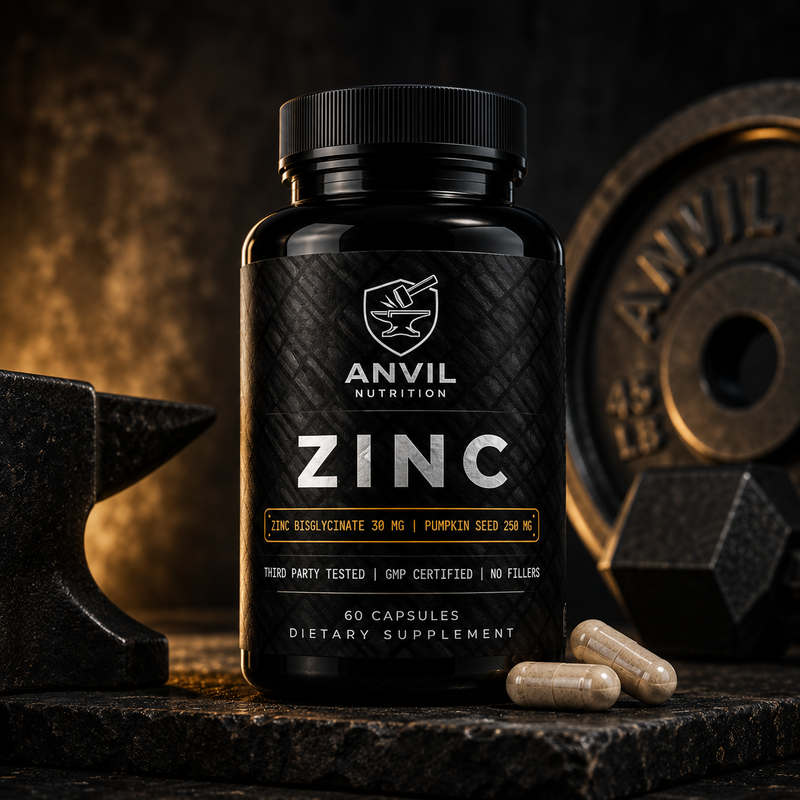
| Zinc as Zinc Bisglycinate Chelate, 273% Daily Value | 30 mg |
| Pumpkin Seed Extract Daily Value not established | 250 mg |
60 capsules per bottle. Two active ingredients. No fillers, no proprietary blends.

1 capsule daily. Each capsule delivers the full 30 mg dose.
Take with food. Bisglycinate is easier on the stomach than other zinc forms, and taking it with a meal makes nausea even less likely.
Your body does not store zinc in large amounts, so daily intake is what maintains the tissue levels that your immune function and your hormone production depend on.
You can take it alongside the Anvil Daily Multivitamin and Creatine, and alongside IGNITE as well. If you stack it with the multivitamin, know that the multi already contains zinc, so factor that into your total or ask your physician.
Manufactured in a GMP certified facility for Anvil Nutrition LLC. Third-party batch tested for purity and potency. Full testing results available on the Research & Testing page.